
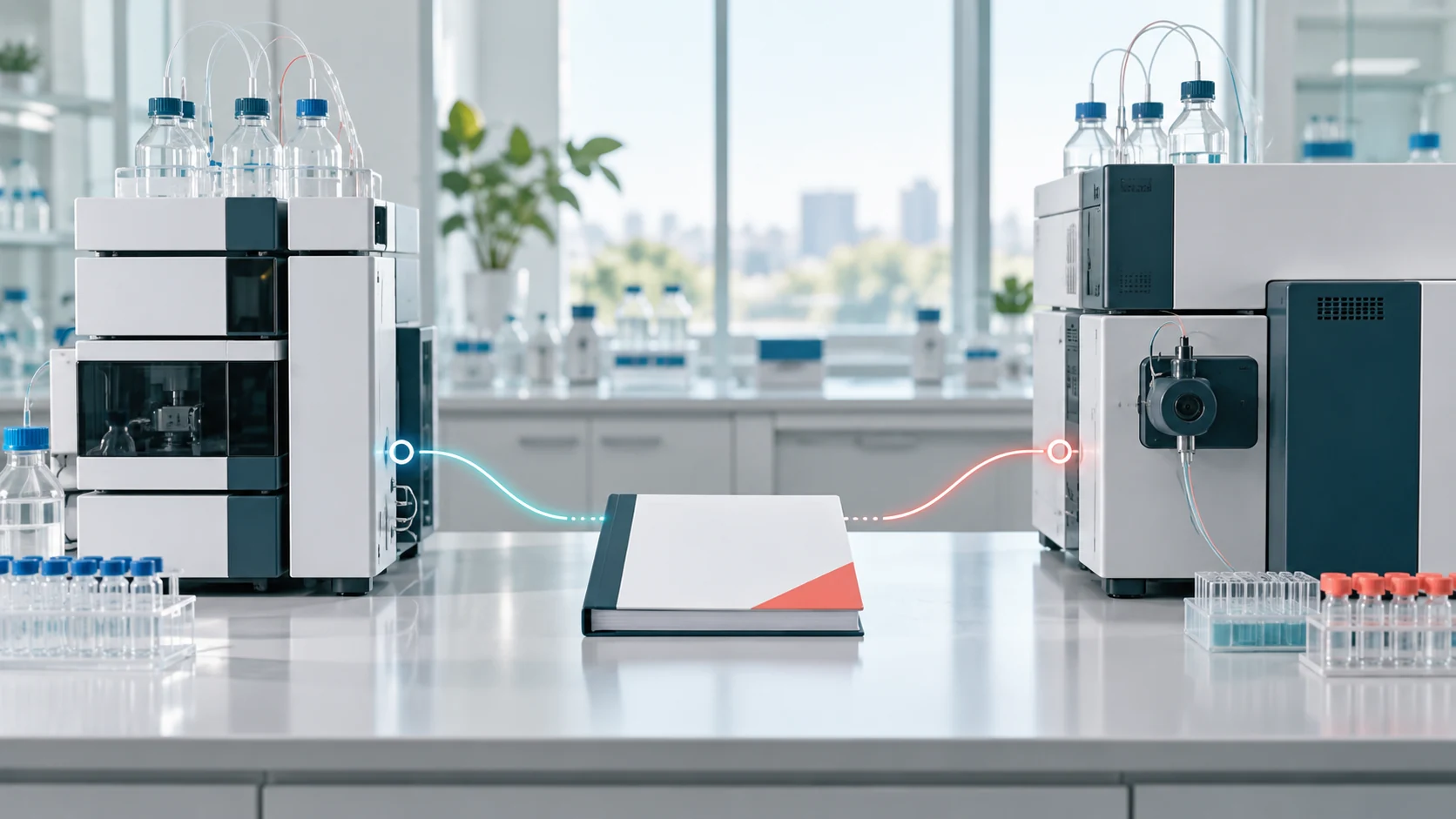
Direct answer. A custom peptide method is not transferred merely by emailing an HPLC chromatogram. The receiving laboratory needs the intended measurement, controlled procedure, reference and sample definitions, predefined acceptance criteria, comparative evidence and a record of deviations or changes.
Define what the method is supposed to measure
A peptide OEM brief should first identify the exact sequence, modifications, counterion or salt description, intended research matrix and attribute to be reported. Identity, assay, related substances and water content are different questions; one chromatographic area percentage cannot answer all of them. ICH Q14 describes an analytical target profile and selection of technology based on the attribute and the intended procedure purpose. ICH Q6A distinguishes identity, assay and impurities in its new chemical drug-substance and drug-product scope.
These guidelines are technical frameworks, not proof that any laboratory serving this site is GMP certified or that a research material meets pharmaceutical specifications. For a project record, write down the material definition, sample preparation, reportable unit, reference material provenance and method version. If the buyer needs mass confirmation, chromatographic separation and quantitative content, assign an explicit acceptance question to each measurement. The purity-versus-assay guide explains why the results must remain distinct.
The transfer brief
- Material: sequence, modifications, salt/counterion and matrix.
- Result: identity, assay or impurities with a reportable unit.
- Control: method version and reference-material traceability.
Agree on performance before the receiving lab starts
ICH Q2(R2) sets out characteristics such as specificity or selectivity, accuracy, precision and reportable range, chosen according to the procedure’s purpose. Its lifecycle section says that transfer to another laboratory may involve partial or full revalidation and/or comparative analysis of representative samples. The extent depends on the characteristics affected; simply rerunning a neat standard cannot show that the receiving lab handles a real project sample as intended.
Before shipment, specify which representative lots or samples will be tested at both sites, how results will be compared and how out-of-criteria findings will be investigated. Include instrument configuration, column and mobile-phase details where relevant, system suitability, integration rules and calculations in the controlled package. If a reference is unavailable or the analyte definition is uncertain, state the gap rather than inventing a passing number. A method-transfer pass means the agreed procedure met its agreed purpose under documented conditions; it does not certify unrelated batches.
Evidence at the receiving site
- Predefine acceptance and comparison rules.
- Use representative samples, not standards alone.
- Document deviations, investigation and revalidation rationale.
Close the loop with a batch-specific report
A transfer report should connect the originating and receiving method versions, laboratory identities, sample and reference identifiers, raw-data locations, results, deviations and approval decision. If either lab modifies the procedure after transfer, reassess whether the changed parameter can affect specificity, quantitation or robustness. ICH Q14 treats analytical procedures as a lifecycle, and Q2(R2) links changes to justified revalidation. The same principle helps a research buyer ask useful questions even when a formal regulatory transfer package is outside the project scope.
Do not advertise a generic “99% HPLC” value as evidence that a named custom sequence has the desired identity or quantity. Request a report tied to the proposed batch, with method and result definitions visible. The COA guide and traceability guide provide the adjacent checks. This article concerns custom peptide projects. Published CBL-514 clinical papers call CBL-514 a small molecule; the peptide transfer workflow should not be presented as its chemical identity proof.
What the final record must contain
- Map every result to a specific sample and batch.
- Preserve both method versions and change decisions.
- Keep custom peptide methods separate from CBL-514 identity claims.
Reviewed 31 October 2026. This independent editorial page describes published evidence and research-procurement documentation. It does not provide treatment, preparation or administration advice. Verify current source versions before relying on a changing clinical or regulatory record.
Frequently asked questions
Does a chromatogram prove that a peptide method transferred?
No. A transfer needs a defined purpose, procedure, comparison plan and receiving-lab performance evidence, with representative samples and a documented decision.
Can one HPLC area percentage establish identity and assay?
Not by itself. Identity, content and impurity profile are separate attributes; the method and reference must be fit for each claimed result.
Must every method transfer use full revalidation?
ICH Q2(R2) allows a science- and risk-based choice of partial or full revalidation and/or representative-sample comparison, with justification.
Is CBL-514 a custom peptide covered by this checklist?
The CBL-514 clinical publications describe a small-molecule agent. This checklist is for genuine custom peptide projects and does not establish CBL-514 identity.